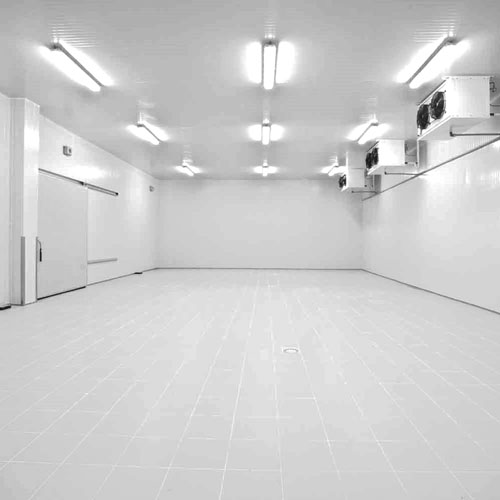
A layer of frost or a solid sheet of ice on the evaporator, the ceiling or the floor of a walk-in cooler is one of the most common call-outs we get from restaurants, bakeries and butcheries. It is never just cosmetic. Ice is a sign that the system is not defrosting properly or that moisture is getting in where it should not. Left alone, it restricts airflow, pushes your temperatures up, drives the compressor harder and eventually gives you a very expensive breakdown on the busiest day of the week.
Here are the causes we see most often, roughly in order of how common they are.
1. A failed defrost system
Every cooler evaporator collects frost during normal running, because the coil is colder than the freezing point of the water vapour in the room. To clear it, the system runs a defrost cycle on a schedule. Depending on the design that is done by an electric heater, hot gas, or simply by letting the compressor stop long enough for the air to melt the frost (the off-cycle method used in higher temperature rooms).
If the defrost timer, the heater element, the termination thermostat or the controller fails, the frost never fully clears. Each cycle adds a bit more, until the coil becomes a block of ice. You will notice the cooler struggling to hold temperature, and often water pooling on the floor when it eventually melts.
2. Door seals and door habits
Warm, humid kitchen air is the fuel for ice. Every time the door is propped open, or the gasket is torn or no longer sealing, moist air enters, meets the cold coil and freezes. Check the gasket along the full perimeter, especially the bottom corners. Look for light showing through when the door is closed, or tears and hardened sections. Strip curtains and a door closer help a lot in busy kitchens, and so does training staff to close the door every time.
3. Blocked airflow
The evaporator fan needs space to move air. Boxes stacked against the coil, crates on the floor under the unit or cling film hanging over the fan guard all reduce airflow. Less airflow means the coil runs colder than it should and frosts faster. Keep a clear gap of around a hand's width or more between stock and the evaporator, and never stack product directly beneath the unit.
4. Low refrigerant or a leak
When refrigerant leaks out slowly, the pressure on the low side falls and so does the evaporating temperature. The coil can run well below freezing even in a cooler, and starts to ice from the start of the coil. The ice often appears in a pattern, with the first section frosted and the rest bare. A leak needs to be found and repaired, not just topped up. Topping up without fixing the leak wastes money and, with some refrigerants, breaks environmental rules.
5. Drain line problems
Defrost water has to leave the room. If the drain line is blocked, kinked or has no heat trace in a freezer room, the water freezes in the pipe and backs up into the drain pan. That makes a thick ice block under the evaporator, which blocks the airflow even further. This is especially common in freezer rooms where the drain line runs through a cold area.
6. Product and temperature settings
Putting hot food into the cooler adds a big load of moisture. So does leaving uncovered liquids or open produce. Set a rule that cooked food is cooled and covered before it goes in, and that the cooler is not used as a place to cool large quantities of hot product at the start of the day.
What you can safely do yourself
- Check door seals, hinges and the door closer.
- Clear stock away from the evaporator and keep floors tidy.
- Do not chip ice with a screwdriver or knife. Evaporator coil tubes are thin and easily punctured, which turns an ice problem into a refrigerant leak.
- Keep a simple temperature log. It helps spot a trend before the cooler fails.
- Move stock to a working fridge if the room temperature climbs above 5 degrees Celsius.
When to call a technician
If the ice comes back within a day or two of clearing it, or the coil is frosted solid, the underlying fault needs fixing. A technician will check the defrost controls and heater, measure refrigerant pressures, look for leaks, test fan motors and trace the drain line. Do it sooner rather than later. A defrost fault that costs a small repair today can end up as a compressor replacement in a month.
We repair and service restaurant and bakery coolers, freezer rooms and display units across Durban and surrounding suburbs. Call us if your cooler is icing up and we will get to the cause.
Not sure if this applies to your fridge? Ask us.
Call 083 538 5106